
Exacta Wheel Betting: Mechanics and Cost Breakdown
 Available in US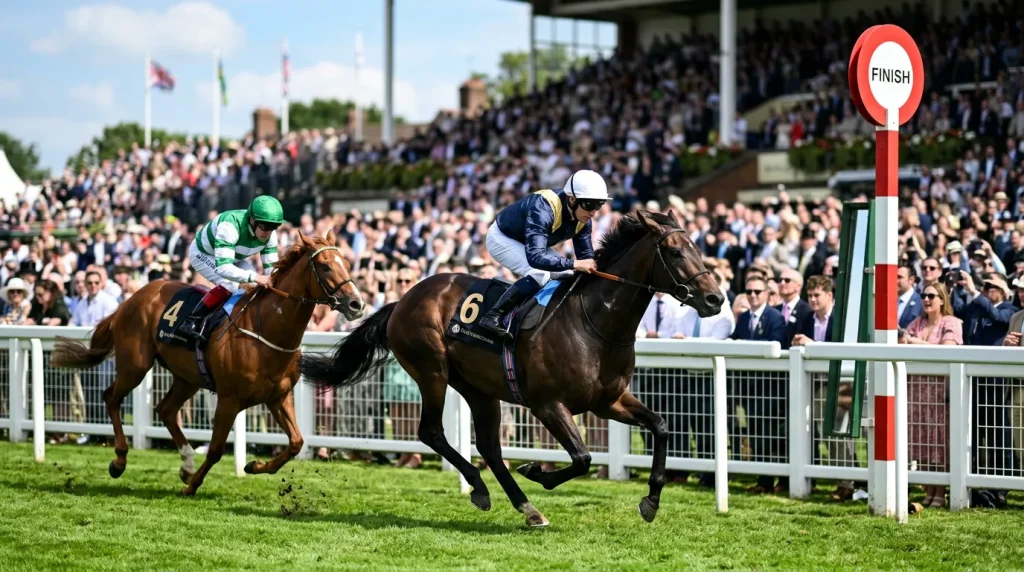
Exacta Wheel Basics: Calculating Combinations and Costs
The exacta wheel is the entry point to structured exotic betting. It asks you to do one thing well — identify a horse that will finish in a specific position — and handles the rest through systematic combination. If you have ever placed a win bet and wished you could profit from being right about the winner without needing to name the exact runner-up, this is the wager that solves that problem.
In an exacta, you predict which horse finishes first and which finishes second, in that precise order. Get both right and the payout is significantly larger than a standard win bet. Get either wrong and the bet loses. The wheel modification removes half the guesswork: you lock your key horse into first place and wheel every other runner — or a chosen subset — into second. One strong opinion, multiple coverage, one clean structure.
This guide takes the exacta wheel apart piece by piece: the formula, the cost at different field sizes, the UK pool betting equivalents that let you place this bet at any licensed bookmaker or through the Tote, and the situations where it offers genuine value. If you are building an exotic betting toolkit, this is the first tool off the rack.
Mechanics and Formula
The exacta wheel formula is the simplest in exotic betting. For a full wheel with one key horse in first position:
Number of combinations = (n − 1) × stake
Where n is the total number of runners in the race. If there are eight runners, your key horse occupies the first-place slot and the remaining seven rotate through second. That gives you seven combinations. At a £1 unit stake, the total cost is £7.
The formula scales linearly. In a twelve-runner race: 11 combinations, £11 at £1. In a sixteen-runner Premier-fixture handicap: 15 combinations, £15. This linear scaling is one of the exacta wheel’s most attractive properties — unlike trifecta and superfecta wheels, where costs grow geometrically, the exacta wheel’s price increase is steady and predictable.
For context, the average flat-race field in Britain during 2025 comprised 8.90 runners, as recorded in the BHA’s Racing Report. On Premier fixtures — the higher-profile cards that draw larger fields — the average rose to 11.02. So a typical exacta wheel in UK flat racing costs between eight and eleven units of stake. At £1 per combination, that is a manageable investment for most punters.
Full Wheel vs Partial Exacta Wheel
A full exacta wheel includes every runner in the field except the key horse. You are covered regardless of which horse finishes second, as long as the key wins. A partial exacta wheel includes only selected runners in the second position. This reduces cost but introduces the risk that the actual runner-up is not in your selection set.
Suppose you are in that eight-runner race and you believe only three of the remaining seven are realistic contenders for second place. A partial wheel with your key and those three creates just three combinations — £3 instead of £7. The saving is meaningful, but you are now exposed if one of the four excluded horses fills the runner-up spot.
The choice between full and partial is a function of confidence. Full wheels suit races where you are certain about the key but have no view on the rest. Partial wheels suit races where you can narrow the contenders for the secondary position with reasonable accuracy. Most experienced punters lean toward partial wheels in smaller fields and full wheels in larger, more open contests where runners beyond the obvious contenders have a genuine chance of hitting the frame.
Diagram: An 8-Runner Full Exacta Wheel
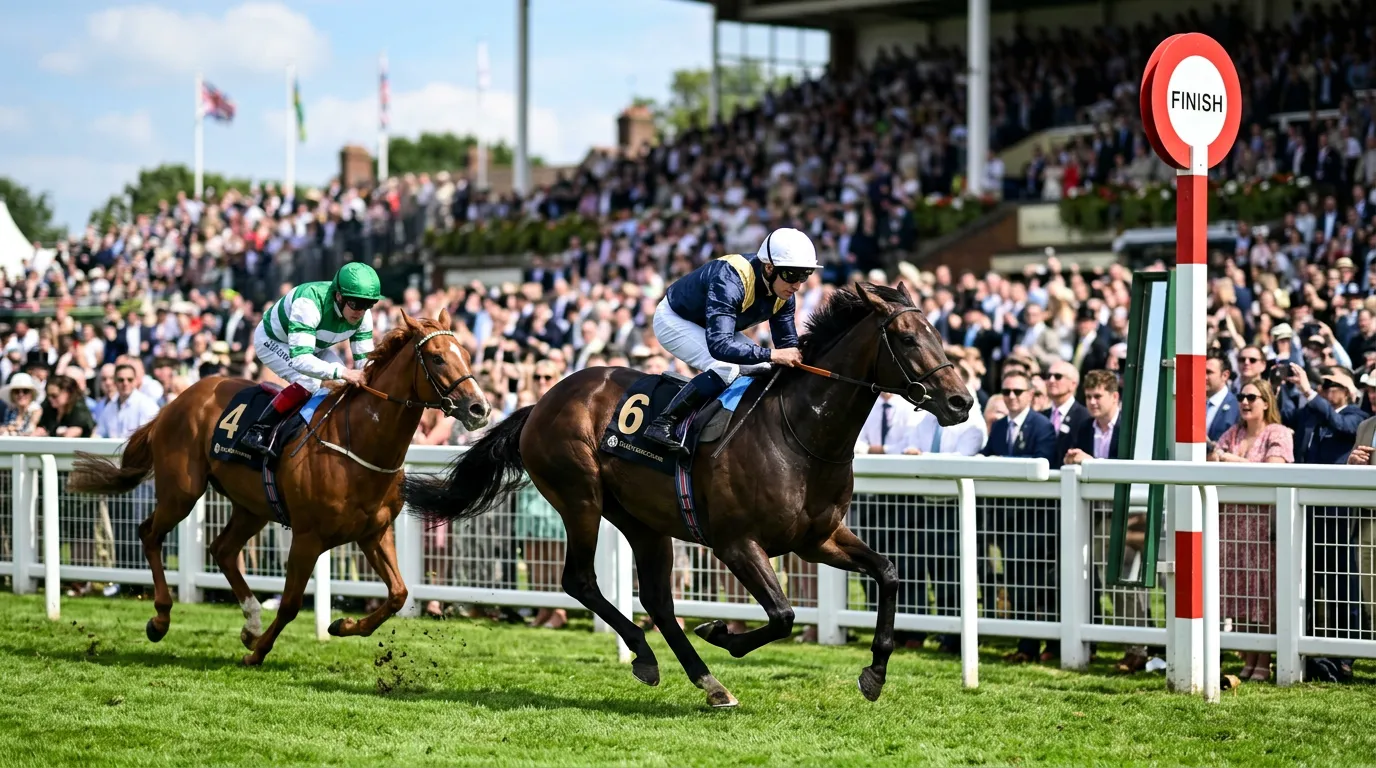
Imagine an eight-runner race. Your key horse is Runner 4. The full exacta wheel generates these seven combinations: Runner 4 first and Runner 1 second; Runner 4 first and Runner 2 second; Runner 4 first and Runner 3 second; Runner 4 first and Runner 5 second; Runner 4 first and Runner 6 second; Runner 4 first and Runner 7 second; Runner 4 first and Runner 8 second. Seven tickets, seven chances. If Runner 4 wins and any other horse finishes second, one of those tickets pays.
UK Pool Equivalent: Tote Exacta and Combination Forecast
If you search for “exacta wheel” on a UK bookmaker’s website, you will not find it. The product exists — it just goes by different names. Understanding the translation between US exotic terminology and UK betting language is essential for anyone who wants to place these bets in Britain.
Tote Exacta
The Tote Exacta is the direct pool-betting equivalent of an exacta. You select a horse for first place and a horse for second place, and if both finish in those exact positions, you collect the pool dividend. To build a wheel, you simply select one horse for first and multiple horses for second. The Tote app and website handle this natively — select your first-place horse, then tap each runner you want in second, and the system calculates the combinations automatically.
Pool dividends fluctuate with the weight of money in the pool, which makes the Tote both unpredictable and occasionally very generous. On the 2021 Grand National, the Tote Exacta paid £2,053.30 to a £1 stake. The Computer Straight Forecast offered by bookmakers for the identical result was £882.65 — less than half. That gap illustrates why the Tote is worth checking, especially on big-race days when the pool is deep and the result is unexpected.
As Sam Nati, Head of Commingling at the Hong Kong Jockey Club, noted in 2025, World Pool continues to drive great value for customers, with dividends consistently outperforming the local starting price. The Tote Exacta, particularly on races included in the World Pool, benefits from this global liquidity effect.
Combination Forecast
At fixed-odds bookmakers like Bet365, Ladbrokes and Coral, the equivalent product is the combination forecast. A straight forecast is a single bet on two horses to finish first and second in order — essentially a single exacta. A combination forecast covers multiple permutations. To replicate a wheel, you select one horse in first place and several in second. The bookmaker generates one straight forecast per pairing.
The payout on a combination forecast is determined by the Computer Straight Forecast formula, which uses the starting prices of the two horses to calculate a dividend. This figure is standardised across all bookmakers. Unlike the Tote, there is no pool — the CSF is a mathematical construct designed to approximate what a pool dividend would have been. It tends to be more predictable than a Tote dividend but, as the Grand National data shows, can also be significantly less generous when the Tote pool pays out at an unusual premium.
For UK punters, the practical advice is simple: check both. Before the race, compare the Tote Exacta pool depth with the CSF market. On races with deep pools and competitive fields, the Tote often offers better value. On smaller races with thin pools, the CSF may be more reliable.
When the Exacta Wheel Makes Sense
The exacta wheel is not a bet for every race. It is a bet for a specific type of situation — one where you have a strong opinion about the winner and genuine uncertainty about the runner-up. When those conditions are present, the exacta wheel converts your partial knowledge into a structured position at a manageable cost.
The ideal exacta wheel scenario involves a standout key horse in a competitive field. Think of a class-dropping favourite in a handicap where the form behind it is compressed — several horses capable of running second but none clearly superior to the others. Your key horse gives you a high-probability anchor; the wheel gives you coverage for the unpredictable scramble behind.
It works less well in two-horse races or very short fields. If the race boils down to two obvious contenders, a straight exacta (naming both) is cheaper than a wheel and perfectly adequate. It also works less well when you have no genuine view on the winner. Without a credible key horse, the wheel becomes random coverage — and random coverage is just another way of saying you are paying the takeout on a bet with no analytical edge.
For the UK punter, the exacta wheel is particularly effective on mid-week cards where field sizes cluster around the national average of nine runners and the form is readable without requiring expertise in deep handicap analysis. An eight or nine-runner race, a key horse identified through form and class, and a £7 to £8 full wheel — that is the sweet spot where cost, coverage and potential reward align.
A Solid Foundation for Bigger Exotic Plays
The exacta wheel is the foundational exotic wager. Its formula is simple, its cost scales linearly, and its UK equivalents — the Tote Exacta and the combination forecast — are available on every licensed platform. Master the exacta wheel and you have the mechanical understanding to step up to trifecta and superfecta wheels, where the logic is identical but the number of positions and the cost multiply accordingly.
Start here. Learn the formula, run the numbers, compare the Tote dividend with the CSF after each race, and build your intuition for when the exacta wheel offers value and when it does not. Every serious exotic punter started with this bet. There is a reason for that — it works.
Sources
- BHA — 2025 Racing Report, average field sizes: britishhorseracing.com
- Betting Sites Offers — Tote Exacta vs CSF dividend comparison, Grand National 2021: bettingsitesoffers.com
- iGamingToday — Sam Nati, HKJC, on World Pool dividends: igamingtoday.com
