
Quinella Wheel Betting: Simple Exotic Wagers
 Available in US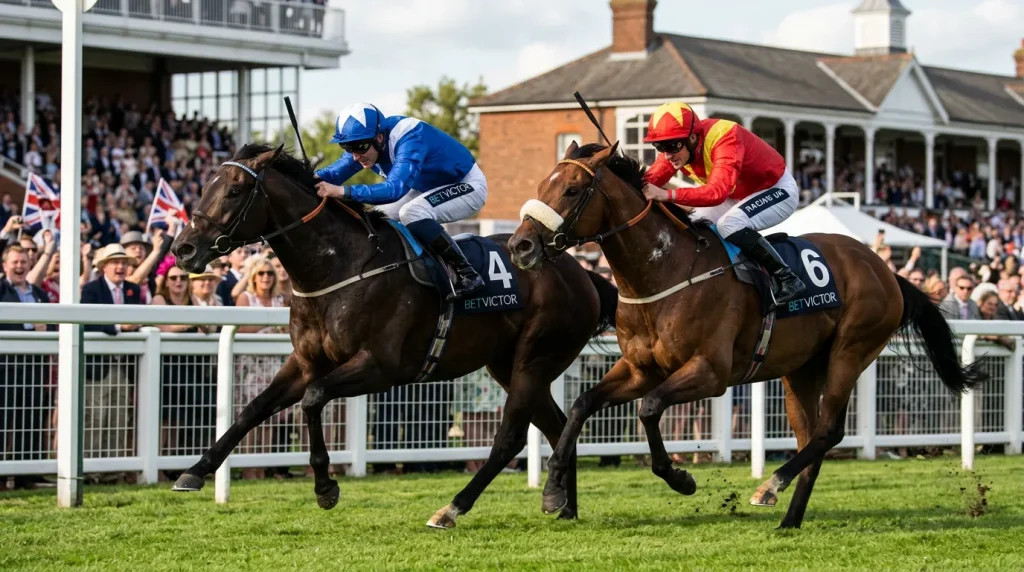
Quinella Wheel Bets: Pairing Strategies for Top Two Finishes
The quinella wheel is the most forgiving exotic bet in horse racing. While an exacta demands that you name first and second in precise order, a quinella asks only that your two selections finish in the top two — in either order. That relaxed requirement halves the difficulty and, in most cases, halves the cost. For the newcomer who wants to step beyond win and each-way betting without committing to the precision of an exacta or the expense of a trifecta, the quinella wheel is a natural entry point.
According to Entain analysis, roughly half of all Grand National turnover comes from casual punters wagering £5 or less. Many of those punters would benefit from a structured exotic that does not punish imprecision. The quinella wheel is exactly that: you pick one horse you trust, wheel it with several others, and collect if your horse and any of those others fill the first two places in any order. The margin for error is generous, the outlay is modest, and the concept takes about two minutes to learn.
This guide explains how the quinella wheel works, how it differs from the exacta wheel in cost and structure, where UK punters can place it, and what a realistic bet looks like in a standard British field.
How It Differs from an Exacta Wheel
The difference between a quinella and an exacta is a single word: order. An exacta wheel requires your key horse to finish in a specific position — say, first — and any of the wheeled runners to finish in another specific position — say, second. If your key horse finishes second and the wheeled runner finishes first, the exacta loses. The finishing order was reversed, and the bet does not forgive that.
A quinella wheel removes that constraint. Your key horse and the wheeled runner simply need to occupy the top two finishing positions. It does not matter which is first and which is second. If your key horse storms home by five lengths and the wheeled runner grabs second, you win. If the wheeled runner wins and your key horse holds on for second, you still win. The only losing scenario is if one of them finishes outside the top two entirely.
Cost Comparison: Five Selections
The relaxed order requirement means fewer combinations. Consider five selections in both formats:
An exacta wheel with one key in first and four others in second creates 4 combinations. But if you also want coverage with the key in second (a reverse wheel), you need another 4 combinations, bringing the total to 8. An exacta box of five horses creates 5 × 4 = 20 ordered permutations.
A quinella wheel with one key horse and four others creates just 4 combinations — because order is irrelevant. Each combination covers both directions automatically. A quinella box of five horses produces 5 × 4 ÷ 2 = 10 combinations, half the cost of an exacta box.
That halving effect is consistent across all field sizes. For any given set of selections, the quinella version costs exactly half what the exacta version costs when both directions are covered. For a punter on a tight budget or one who is still developing their analytical skills, that cost reduction is significant. It keeps the bet affordable while still providing exposure to exotic dividends.
The trade-off is in the payout. Because quinella bets are easier to win — twice as many outcomes trigger a collection — the dividends are typically lower than exacta dividends for the same result. The pool is divided among more winning tickets. But for the punter who values consistency of returns over occasional jackpots, that trade-off is perfectly acceptable.
UK Availability: Tote Dual Forecast and Bookmaker Options
The quinella is not widely marketed under that name in the UK. British punters encounter it most commonly as the reverse forecast at bookmakers or as part of the Tote’s product range. Understanding the terminology is the first hurdle; once cleared, placing the bet is straightforward.
Tote Swinger and Dual Forecast
The Tote’s equivalent to a quinella is structured slightly differently depending on the product. A Tote Exacta requires order; the Tote does not currently offer a standalone “quinella” product by that name. However, some Tote products — including the Swinger, which requires two of your selections to finish in the first three — provide a similar any-order flexibility with even wider place terms.
For a pure quinella-style bet, the most direct route is the reverse forecast at a bookmaker. A reverse forecast on two horses covers both finishing orders — Horse A first and Horse B second, plus Horse B first and Horse A second — and is settled at the CSF dividend for whichever order materialises. It is effectively a two-combination quinella.
Bookmaker Reverse Forecast
At Bet365, Ladbrokes and Coral, the reverse forecast is available on the horse racing racecard. Select two horses and choose “Reverse Forecast” from the bet type menu. The system generates two straight forecasts — one for each order — and the total cost is twice your unit stake.
To build a quinella wheel, you can place multiple reverse forecasts with your key horse paired against each of your selected runners. Five pairings produce ten straight forecasts (five pairs × two orders each). This replicates the economics of a quinella wheel, though the bet slip mechanics are slightly more manual than a true quinella product would be.
It is worth noting that the UK’s network of 5,789 licensed betting shops (as of Q1 FY 2025/26, per Gambling Commission data) also handles reverse forecasts over the counter. The process is the same: name your key horse, name the horse you want to pair it with, and ask for a reverse forecast. The counter staff will confirm the two-unit cost.
Worked Example: 8-Runner Race, £1 Quinella Wheel
Let us build a quinella wheel step by step. The race is an eight-runner Class 4 handicap on good ground. You have studied the form and you are confident that Horse 2 will finish in the top two, but you are not sure whether it will win or be narrowly beaten into second. That uncertainty is precisely the scenario the quinella is designed for.
You wheel Horse 2 with every other runner in the field. That produces seven pairings:
Horse 2 and Horse 1. Horse 2 and Horse 3. Horse 2 and Horse 4. Horse 2 and Horse 5. Horse 2 and Horse 6. Horse 2 and Horse 7. Horse 2 and Horse 8.
Each pairing is a quinella — any order counts. At £1 per combination, the total outlay is £7. If you are placing this as reverse forecasts at a bookmaker, each reverse costs £2 (two straight forecasts), so seven pairings would technically cost £14 — twice the quinella equivalent. This is the price of using a bookmaker’s forecast system rather than a native quinella product. On the Tote, a comparable structure using Exacta bets with both orders selected would similarly double up.
The race runs. Horse 2 finishes second, beaten a head by Horse 5. Your pairing of Horse 2 and Horse 5 is a winner. Because you placed a quinella (or reverse forecast), the order does not matter — you collect regardless of which horse was first and which was second. Had you placed an exacta wheel with Horse 2 fixed in first, this bet would have lost.
That last point is the quinella’s defining advantage. It accommodates the scenario where your key horse runs well but does not quite win — a common outcome in racing, where margins are thin and finishing positions can swap in the final stride.
The Gentle On-Ramp to Exotic Betting
The quinella wheel is the gentlest introduction to exotic wagering. It costs less than an exacta wheel, forgives imprecision in the finishing order, and rewards a skill that most punters already possess: identifying a horse that will run in the first two. For anyone who has been placing each-way bets on horses they expect to hit the frame, the quinella wheel is a natural upgrade — same analytical foundation, higher potential reward, and a structure that treats near-misses as hits rather than losses.
Start with small fields and £1 stakes. Get comfortable with the mechanics, learn the reverse forecast pathway at your preferred bookmaker, and compare dividends with what an exacta would have paid. Once you see the value of any-order coverage, you will understand why experienced punters keep the quinella wheel in their toolkit alongside the flashier exotic types.
Sources
- Entain analysis via UK Bookmakers — Grand National casual punter turnover data: ukbookmakers.org.uk
- Gambling Commission — quarterly industry statistics, number of licensed betting premises Q1 FY 2025/26: gamblingcommission.gov.uk
