Comparing Returns: Each-Way Bets vs Wheel Bets
 Available in US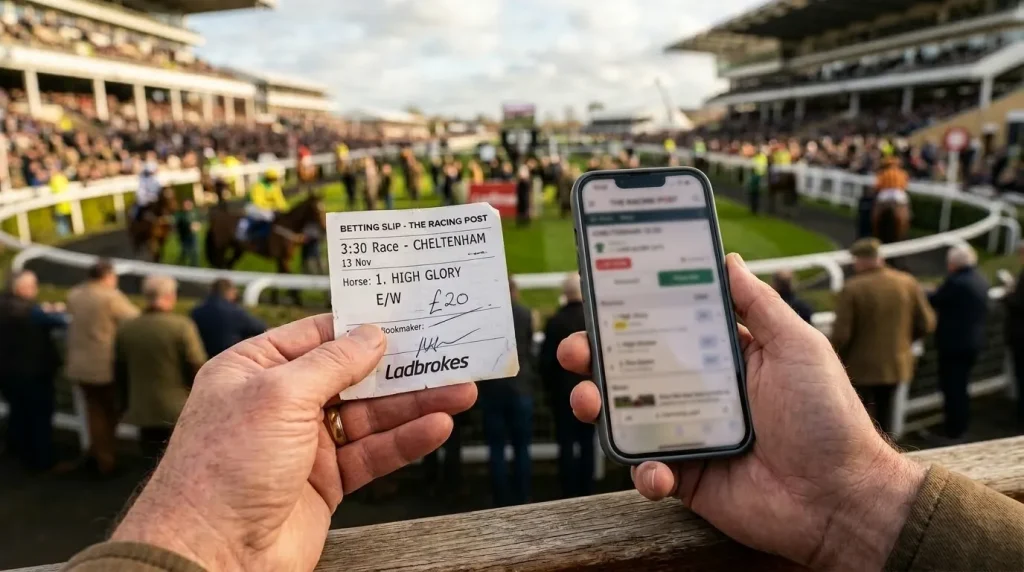
Each-Way Bets vs Wheel Bets: Maximising UK Racing Payouts
The each-way bet versus the wheel bet is a comparison most UK punters never make — because most UK punters have never placed a wheel bet. Each-way dominates British racing culture. It is the default wager for the once-a-year Grand National punter and the bread-and-butter of the daily form student alike. A 2025 YouGov survey found that 17% of British adults planned to bet on the Grand National, and the overwhelming majority of those bets were simple win or each-way stakes.
The wheel bet — or its UK equivalent, the combination forecast — operates in entirely different territory. It does not protect against your horse losing. It does not offer a consolation payout for placing. What it does offer is a substantially larger return when your analysis is correct, by converting a strong opinion about one horse into a structured exotic position that captures value from the finishing order behind it.
These are not competing bets. They answer different questions and reward different skills. But if you have only ever used one of them, understanding the other might change the way you approach your next racecard.
Each-Way Mechanics in 60 Seconds
An each-way bet is two bets in one. The first half is a win bet: your horse must finish first to pay. The second half is a place bet: your horse must finish in the designated place positions — typically the top two in fields of five to seven runners, the top three in fields of eight to fifteen, and the top four in handicaps of sixteen or more. The place portion pays at a fraction of the win odds, usually one quarter or one fifth.
Suppose you back a horse at 10/1 each-way with a £5 unit stake. Your total outlay is £10 (£5 win, £5 place). If the horse wins, you collect on both halves: £50 profit from the win and £12.50 from the place (one quarter of 10/1 = 5/2, multiplied by £5), for a total return of £72.50. If the horse finishes second or third but does not win, you lose the £5 win portion but collect £12.50 on the place, for a net loss of £2.50 on the original £10 stake. If it finishes outside the place positions, you lose the full £10.
The each-way bet is essentially a hedge. It acknowledges that your horse might not win but believes it will run well enough to finish in the frame. It is conservative, cost-effective and deeply ingrained in British betting culture. For punters who want exposure to an outsider without the binary win-or-lose outcome, each-way is the natural tool.
Wheel Mechanics in 60 Seconds
A wheel bet (combination forecast in UK terms) anchors one key horse in a specific finishing position — typically first — and pairs it with multiple other runners in the adjacent position (second). If the key horse wins and any of the wheeled runners finishes second, you collect the forecast dividend. If the key horse does not win, every combination loses.
In a ten-runner race, a full exacta wheel with your key horse in first costs nine units — one for each remaining runner wheeled into second. At £1 per combination, total outlay is £9. The payout is the CSF or Tote Exacta dividend, which varies by race but typically delivers multiples of the win price. A key horse at 4/1 paired with a runner-up at 8/1 might return £40 to £60 on the CSF — far more than a simple win bet at 4/1 would have paid.
The wheel has no place safety net. If your key horse finishes second, you receive nothing — even if it was beaten by a nose. This binary nature is the wheel’s sharpest distinction from each-way: it rewards precision and punishes anything less than the exact outcome you predicted.
Head-to-Head: Risk, Cost and Reward
Let us put both bets through the same race and see what happens. The race is a ten-runner handicap. You fancy Horse D, a well-fancied contender at 4/1. Each-way place terms are one quarter the odds for the first three.
Scenario 1: Horse D Wins
Each-way (£5 e/w = £10 total): win portion pays 4/1 × £5 = £20; place portion pays 1/1 × £5 = £5. Total return: £35. Net profit: £25.
Wheel (£1 exacta wheel = £9 total): the CSF dividend depends on which horse finishes second. If the runner-up is a 6/1 shot, the CSF might pay around £38 to a £1 stake. Net profit: £29. If the runner-up is a 20/1 outsider, the CSF might pay £90+, yielding a net profit of over £80.
When the key horse wins, the wheel usually outperforms each-way — often significantly — because it captures the interaction between the winner’s price and the runner-up’s price. The more unexpected the runner-up, the bigger the wheel’s advantage.
Scenario 2: Horse D Finishes Second
Each-way: the place portion pays 1/1 × £5 = £5. Total return: £5 from the place, minus £10 outlay = net loss of £5. A partial rescue.
Wheel: all combinations lose. Net loss: £9. No rescue, no consolation, nothing returned.
This is where each-way earns its reputation as the safe choice. When your horse runs well but does not win, each-way softens the blow. The wheel offers no such cushion.
Scenario 3: Horse D Finishes Fourth or Worse
Each-way: both halves lose. Net loss: £10. Wheel: all combinations lose. Net loss: £9. Interestingly, the wheel is cheaper to lose with in this scenario because the total stake is lower.
The pattern that emerges is clear. Each-way is the better structure when you believe your horse will run well but might not win — it manages downside risk through the place safety net. The wheel is the better structure when you have genuine conviction that your horse will win — it converts that conviction into a larger payout by exploiting the finishing order behind the winner.
Favourites across UK racing win approximately 30 to 35% of the time. In handicaps, the figure drops to around 25.7%, based on analysis of BHA data. Those success rates frame the choice: if you believe your key horse has a better-than-average chance of winning — not just placing — the wheel offers a higher expected return than each-way for the same level of conviction.
As the trainer John Gosden has noted, wagering on horseracing demands thorough research into form, going, draw, distance and pedigree. It is analytical rather than casual. Each-way accommodates a casual approach — back something you like, collect a bit if it places. The wheel rewards the analytical approach — commit to a winner, profit from the order of finish. Neither is wrong. But they are built for different punters.
Different Bets for Different Beliefs
Each-way versus wheel is not a question of which is better in absolute terms. It is a question of what you believe about a horse and how much you are willing to commit to that belief. Each-way says: I think this horse will run well, and I want a safety net if it does not win. The wheel says: I think this horse will win, and I want to maximise my return when it does.
The sharpest UK punters use both — each-way on days when they have mild opinions and want broad coverage, wheels on days when the form points clearly to a single horse and the question is only who finishes behind it. Adding the wheel to your toolkit does not replace each-way betting. It gives you a second gear for the races where confidence is highest and the potential payoff is greatest.
Sources
- OLBG / YouGov — 2025 Grand National Betting Survey: olbg.com
- Grand National Fans — favourite win rate analysis using BHA data: grandnational.fans
- Arena Racing Company — John Gosden on horseracing and gambling: arenaracingcompany.co.uk
