
History of Exotic Betting in Horse Racing: From Pari-Mutuel to World Pool
 Available in US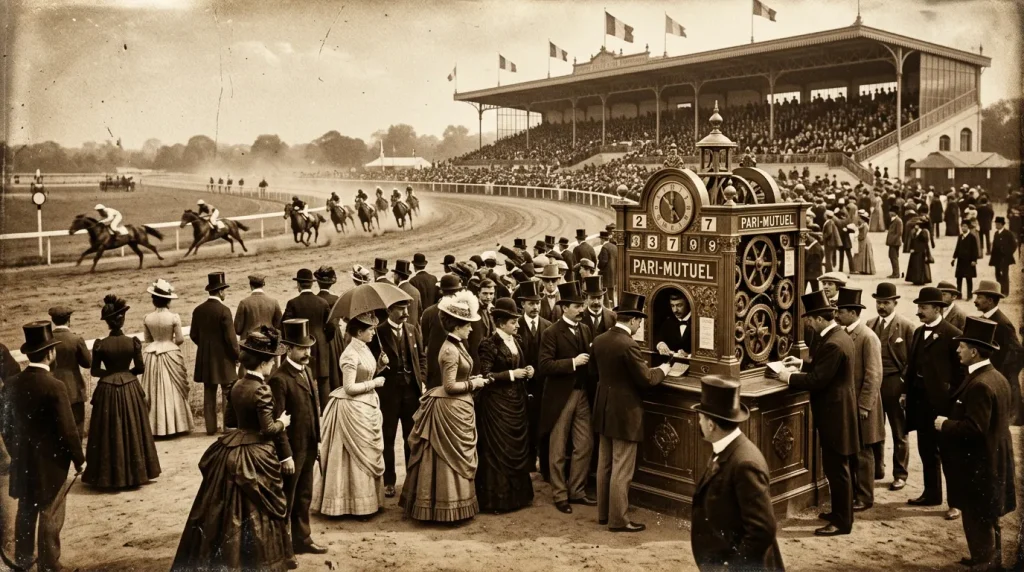
A Simple Idea, 160 Years in the Making
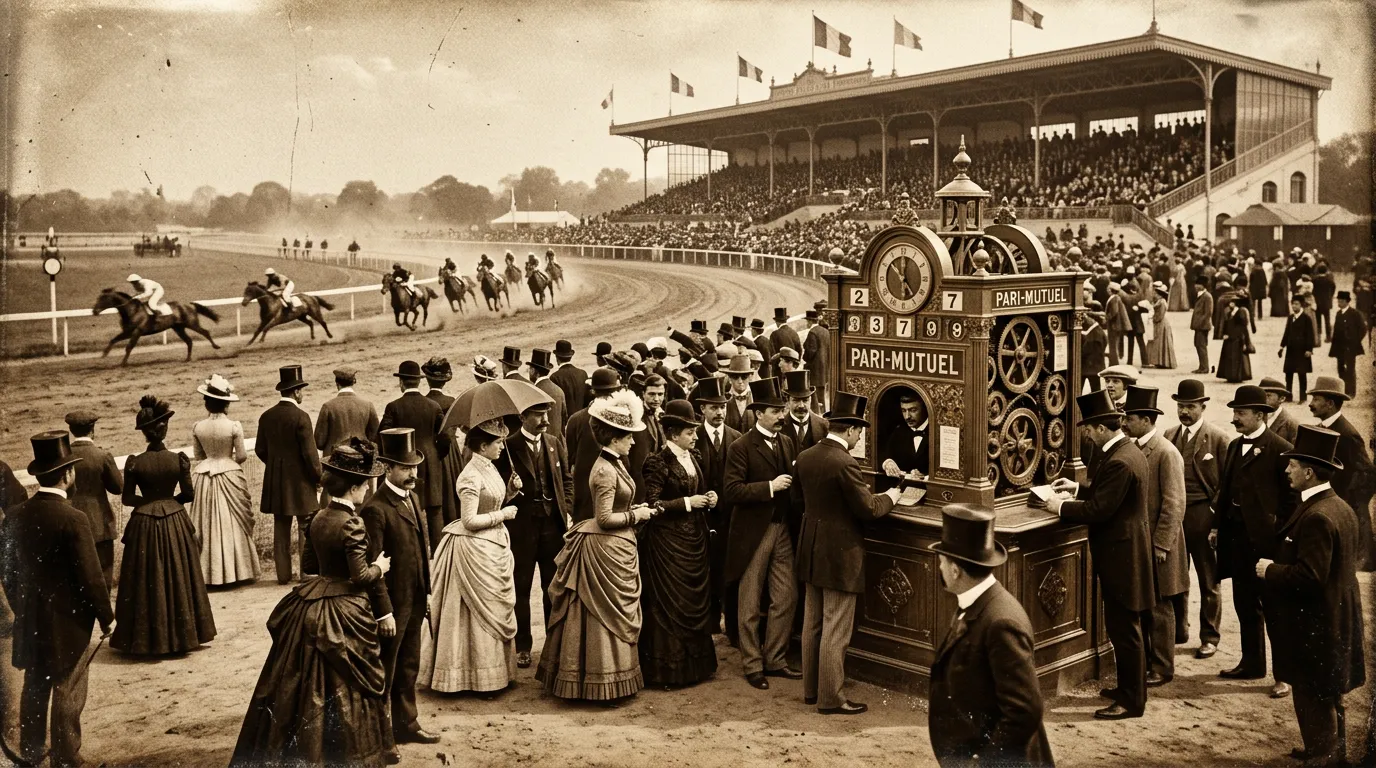
The history of exotic betting begins not with a horse or a race, but with an entrepreneur, a theatre, and a problem. In 1860s Paris, Joseph Oller — a Catalan-born businessman who would later co-found the Moulin Rouge — was looking for a better way to organise wagering. The existing system relied on individual bookmakers setting their own odds and taking their own risks. Oller had a different idea: pool the money, take a fixed cut, and let the crowd set the odds. He called it pari-mutuel — mutual wagering — and the concept would eventually underpin every exotic bet placed in the world today.
From that Parisian innovation to the global commingling pools of 2026, exotic betting has evolved through distinct phases: the mechanical totalisator era, the UK Tote’s century-long run, the American exotic boom, and the digital globalisation that produced World Pool. Each phase added new bet types, new technology, and new ways for punters to engage with the finishing order of a race. This is the story of how those bets came to be.
The French Invention: Pari-Mutuel in 1867
Oller launched his first pari-mutuel operation at the Paris hippodromes in the late 1860s. The concept was radical for its time. Instead of negotiating odds with a bookmaker, every punter placed money into a shared pool. After the race, the operator deducted a commission — the takeout — and divided the remainder among those who had backed the winner. The odds were not set in advance; they emerged from the collective weight of money.
The system had immediate advantages. It was transparent: everyone could see the pool growing. It was scalable: the more people bet, the larger the pool and the more stable the dividends. And it was fair in a specific sense: the operator had no stake in the outcome. Unlike a bookmaker, who profits when favourites lose, the pari-mutuel operator earned the same commission regardless of which horse won.
By the 1870s, pari-mutuel betting had spread across French racecourses. Mechanical totalisator machines — devices that recorded bets, calculated pool totals, and displayed approximate dividends — appeared in the 1880s and 1890s. The Australian engineer George Alfred Julius built the first fully automatic totalisator, a mechanical marvel that used a system of rotating shafts and epicyclic gears to process thousands of bets per minute. Julius’s machine was installed at Ellerslie Racecourse in New Zealand in 1913 — the patent was filed the following year — and subsequently adopted worldwide.
The pari-mutuel system reached the United States in the early twentieth century, where it gradually replaced the bookmaker-dominated model that had been rife with corruption. State legislatures embraced totalisator betting because it offered regulatory transparency and a guaranteed tax base — the takeout percentage was fixed and auditable. By the 1930s, pari-mutuel was the standard form of racetrack wagering in most American states, and the infrastructure was in place for the exotic bet types that would follow.
The UK Tote and Pool Betting’s British Home
Britain took a characteristically independent path. While the rest of the world was adopting pari-mutuel, the UK’s horse racing betting market remained dominated by on-course bookmakers and off-course illegal bookmaking (legalised only in 1961). Pool betting arrived formally with the creation of the Racecourse Betting Control Board in 1928, which operated the Tote — short for Totalisator — as a state-approved pool betting service on British racecourses.
The Tote existed alongside bookmakers rather than replacing them, creating the dual-channel system that persists in the UK today. Punters could choose between fixed odds with a bookmaker and pool dividends with the Tote, and the competition between the two shaped the products each offered. The Tote introduced exotic bet types — forecast (exacta), tricast (trifecta), Placepot, Jackpot — as ways to differentiate its product from the simple win and each-way bets that bookmakers handled most efficiently.
The Horserace Betting Levy Board, established in 1961, created a mechanism for returning betting revenue to the racing industry. The Levy yield for FY 2024/25 reached £108.9 million — a record since the 2017 reform — according to the HBLB’s annual report. That revenue funds prize money, integrity services and industry development, and it is drawn from both bookmaker and Tote turnover. The Tote’s role in generating Levy income has been part of its institutional justification since the system’s inception.
The Tote was privatised in 2011, sold to Betfred for £265 million. In 2019, it was acquired by a consortium led by the Alizeti Capital partnership, which rebranded it as the UK Tote Group and invested in digital infrastructure. The modern Tote operates a mobile app, a website, and on-course betting terminals, and it serves as the UK’s gateway to World Pool commingling.
The US Exotic Boom: Exacta, Trifecta, Superfecta
The United States drove the expansion of exotic bet types from the 1960s onward. The exacta (called the “perfecta” at some tracks) was introduced at US racetracks in the 1960s, requiring punters to predict first and second in order. The trifecta followed in the 1970s, adding third place. The superfecta — first, second, third and fourth — arrived in the 1980s and 1990s, initially as a novelty for big races and later as a standard product.
Multi-race exotics expanded the concept across several events. The Daily Double (picking the winner of two consecutive races) had existed since the 1930s, but the Pick 3, Pick 4 and Pick 6 — requiring winners of three, four or six races — were developed in the 1970s and 1980s. Pick 6 pools, with their potential for carryovers when no one found all six winners, generated enormous pools and headlines that drew casual punters into the exotic betting ecosystem.
Wheel betting emerged as a natural companion to these exotic types. As soon as punters faced the challenge of predicting multiple finishing positions, the wheel provided a systematic way to cover combinations without naming every horse individually. The full wheel and partial wheel became standard vocabulary at American tracks, and the strategies around key horse selection, cost calculation and pyramid structuring developed through decades of racetrack experience.
World Pool and the Global Future
The most significant recent development in exotic betting is commingling — the merging of pari-mutuel pools across national borders. The Hong Kong Jockey Club, the world’s largest pari-mutuel operator, launched World Pool in 2019 to connect its enormous domestic pools with partner operators in dozens of countries. UK punters access World Pool through the Tote, and the impact on dividend quality has been measurable and consistent.
World Pool turnover at Royal Ascot 2025 reached approximately £150 million, a 10% increase on the prior year, according to HKJC and UK Tote Group data. At that meeting, the World Pool Trifecta outperformed the Computer Straight Tricast in 24 of 35 races — a two-thirds dividend advantage driven by the depth of global liquidity that no domestic pool could match alone.
The trajectory points toward deeper integration. As more racing jurisdictions join the commingling network, pools grow larger, dividends become more stable, and exotic bet payouts increasingly reflect true global market dynamics rather than the limitations of local pool size. For the UK exotic punter, the future is a world where your £1 Tote Trifecta on a Saturday at Ascot shares a pool with millions of pounds from Hong Kong, Japan, Australia and beyond — the logical conclusion of an idea that started with a Parisian entrepreneur and a shared pot of francs.
From Francs to a Global Pool
Exotic betting has travelled from Joseph Oller’s Paris hippodromes to the digital commingling pools of World Pool in a little over 150 years. Each era added something: the French gave us the pool model, the British built the Tote, the Americans invented the exotic bet types, and the Hong Kong Jockey Club connected them all into a global network. The wheel bet — the structural tool that this entire site explores — sits at the intersection of all four contributions. Understanding where it came from helps you appreciate what it is: not a gimmick, but the product of a century and a half of innovation in how humans bet on horses.
Sources
- HBLB — Annual Report and Accounts 2024-25, Levy yield £108.9 million: assets.publishing.service.gov.uk (PDF)
- iGamingToday — World Pool turnover at Royal Ascot 2025: igamingtoday.com
